AI Call Analysis
Upload call recordings, get transcripts, scores against your own quality rubric, and a report — with a transcription chain that degrades instead of failing.
- Role
- Architect & sole engineer
The application
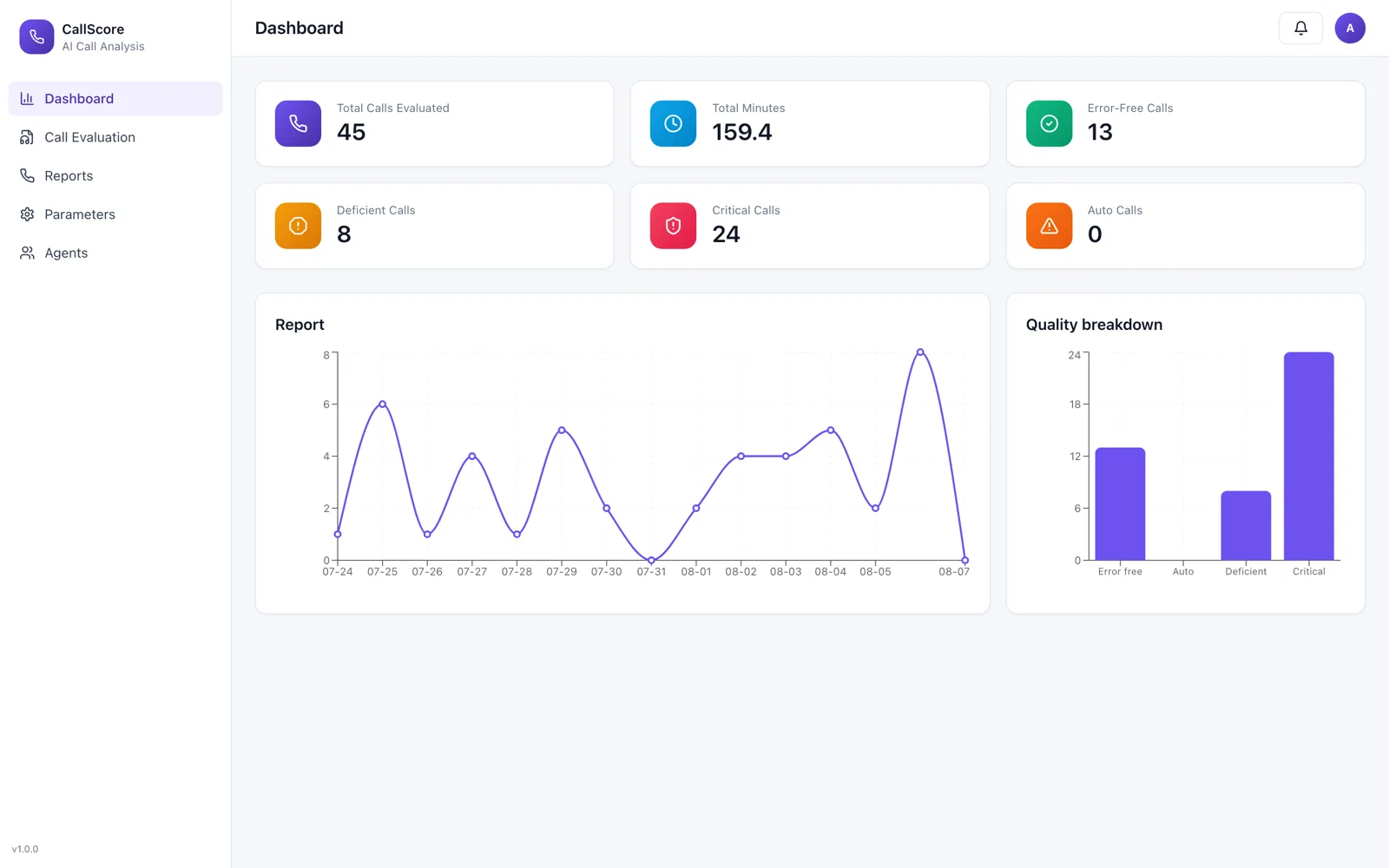
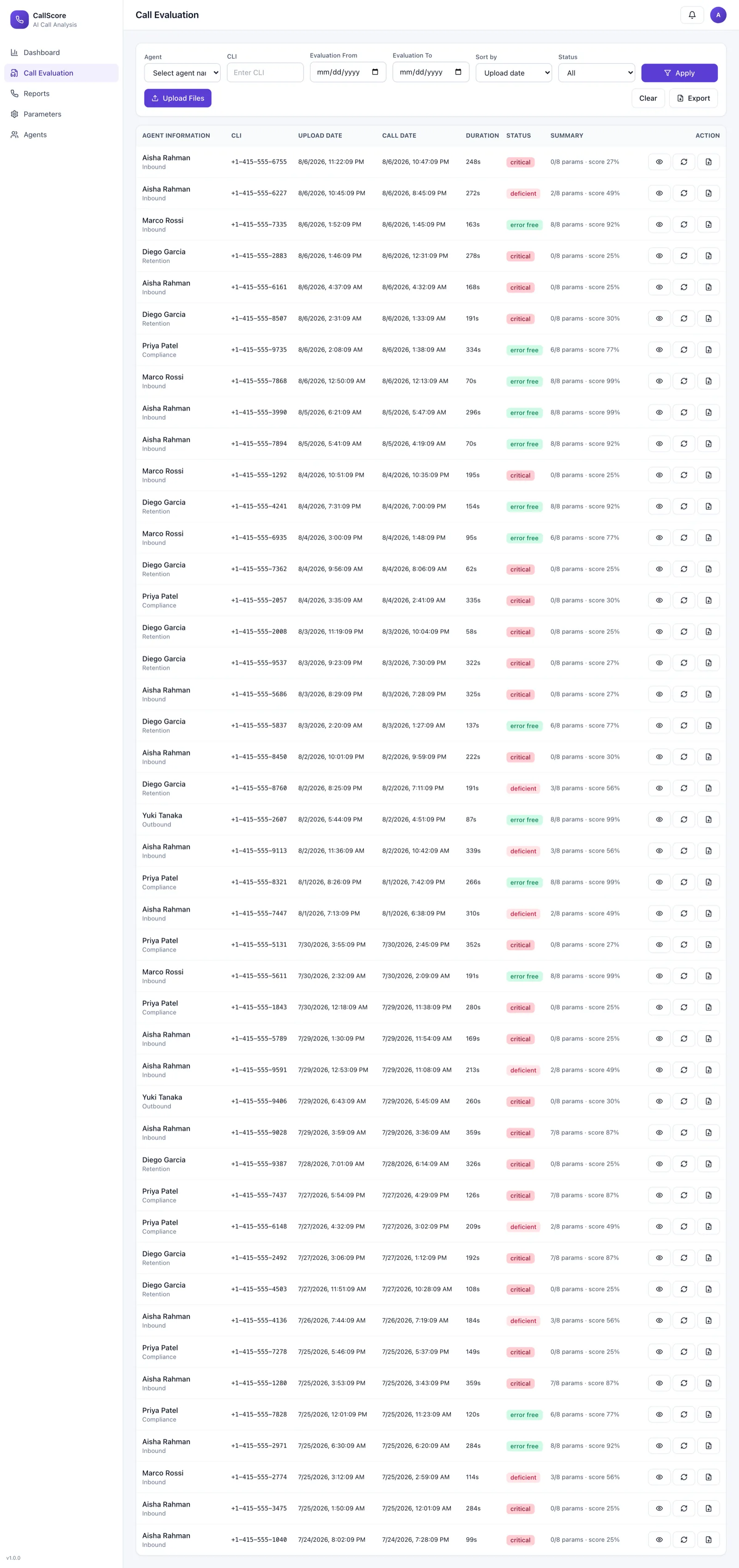
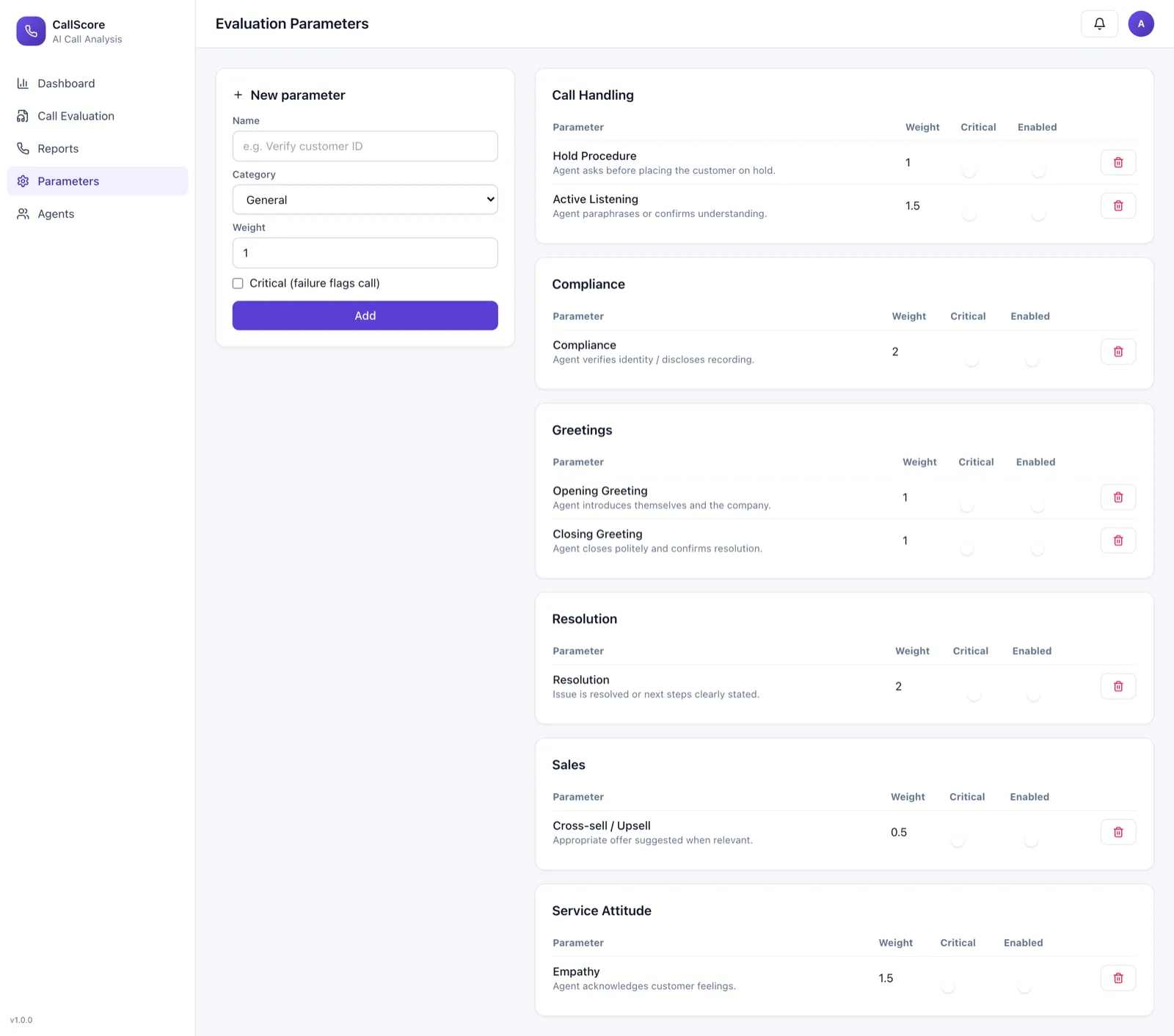
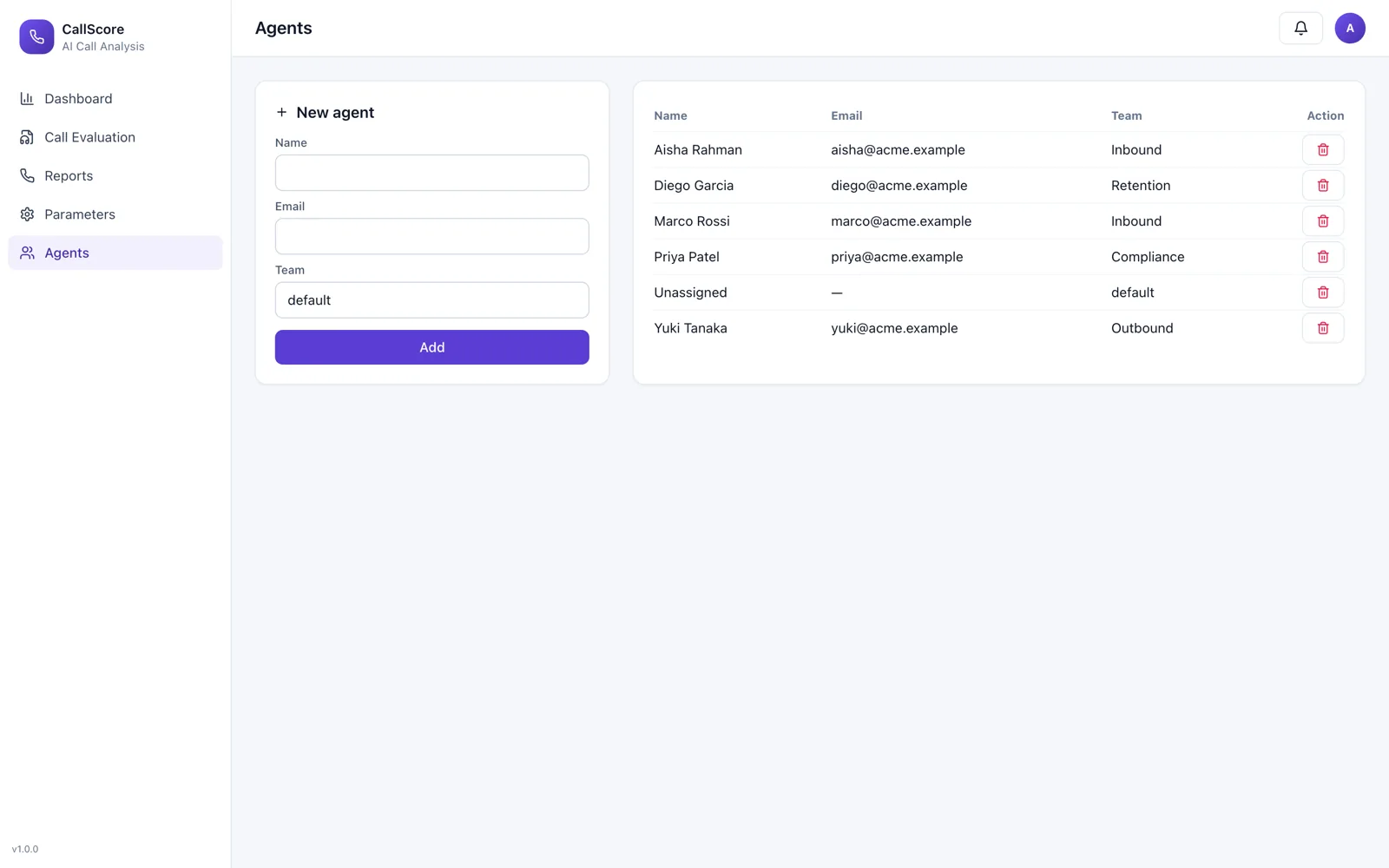
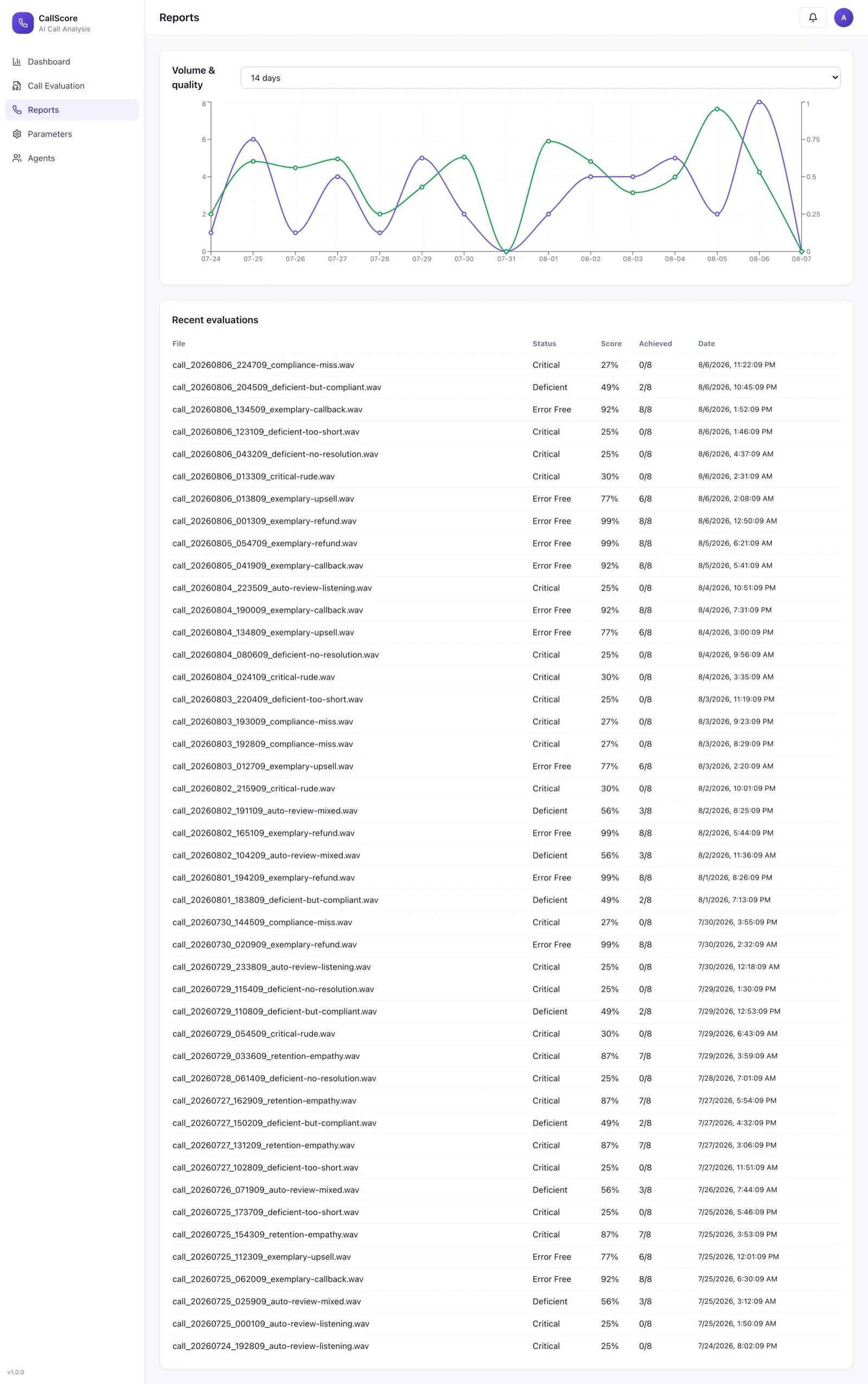
Screens, captured from the running app
Booted against its seeded database and walked route by route — these are the real pages, not mockups.
The problem
Contact-centre QA is a sampling exercise. A supervisor listens to five calls out of four hundred, scores them on a paper rubric, and extrapolates. The sample is small, the rubric is applied inconsistently between supervisors, and nothing about it produces a trend you could act on.
The interesting part of automating it is not the transcription. It is making the scoring defensible enough that an agent will accept it.
The transcription chain
Three tiers, tried in order:
- OpenAI Whisper (
whisper-1) when a key is configured. - Local
faster-whisperwhen it isn't, or when the API call fails. - A mock transcript when neither is available.
Each result records which tier produced it. That last tier exists so the entire system — upload, queue, evaluation, analytics, export — runs end to end on a laptop with no credentials and no GPU, which is the difference between a project someone can actually look at and one that needs an onboarding call.
Scoring against parameters, not a prompt
Quality parameters are database records grouped by category — Greetings, Call Handling, Service Attitude, Closing, Compliance — each with its own weight. The model is asked to judge a call against those parameters, and returns a per-parameter verdict rather than a single number.
That matters for two reasons. The score decomposes, so an agent disputing a 62 can see it came from a compliance miss rather than a vague tone judgement. And the rubric is editable by the person who owns the rubric, without touching a prompt.
There is a heuristic offline evaluator behind the same interface — keyword and structure based, obviously cruder — so the pipeline still produces scores when no model is reachable.
Flags over averages
Each call carries a flag: error-free, deficient, critical, or auto. Averaging call scores hides exactly the calls worth listening to; the current seed sits at 45 calls with 24 critical, and the dashboard leads with that split rather than with a mean.
The rest of it
An async upload-to-analytics pipeline with retry and per-call status tracking; a filterable evaluation table drilling into transcript and per-parameter scoring; agent management; time-series reporting in Recharts; CSV export and PDF transcript download. FastAPI and SQLAlchemy on the backend, Next.js 14 and TypeScript on the front, containerised with docker-compose.