Naija Fashion Marketplace
An iOS-first fashion marketplace where a look, a short video or an inspiration image can become a path to locally available pieces.
- Role
- Product Designer & iOS Engineer
The application
Screens, captured from the running app
Captured from the current iOS prototype. These screens show the product direction and local demo content, not a launched marketplace or evidence of live sellers.
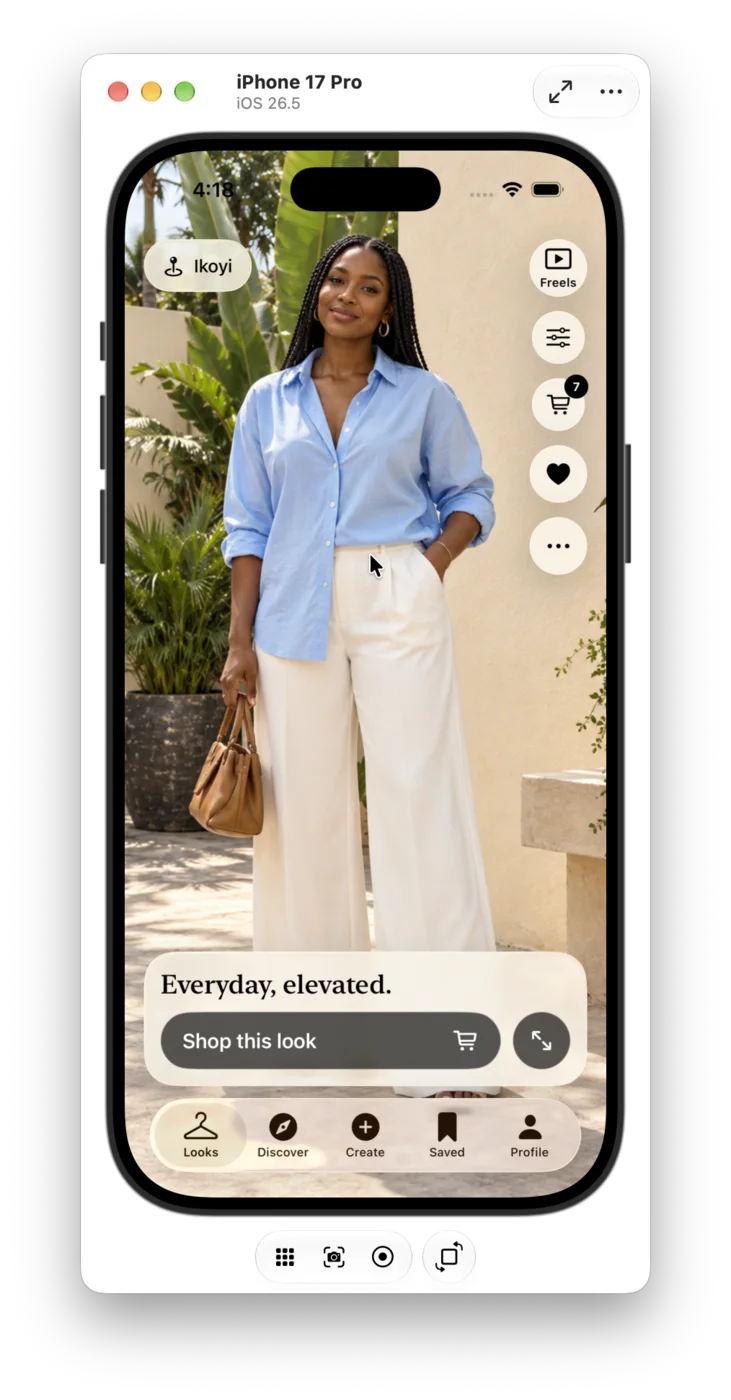
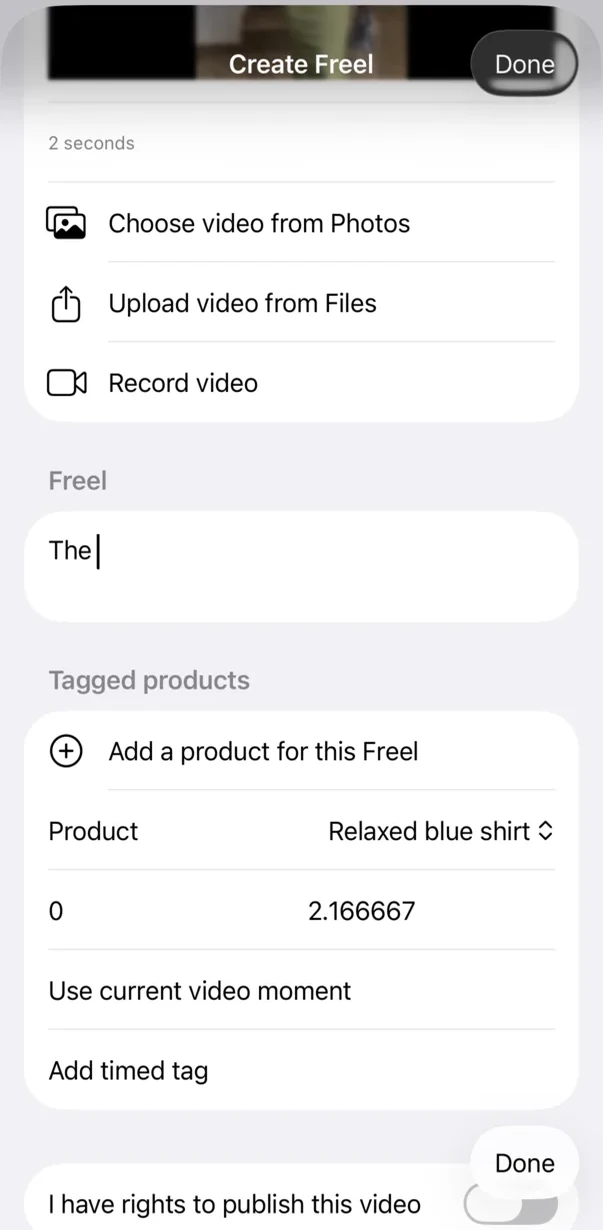
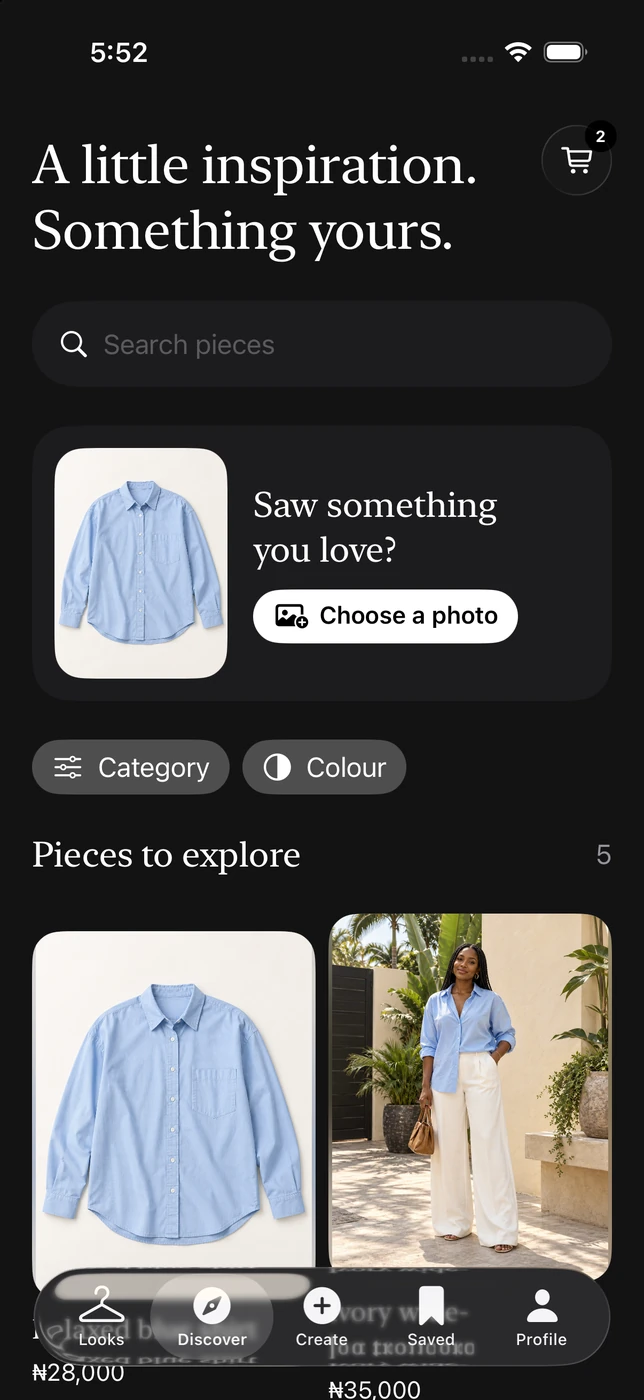
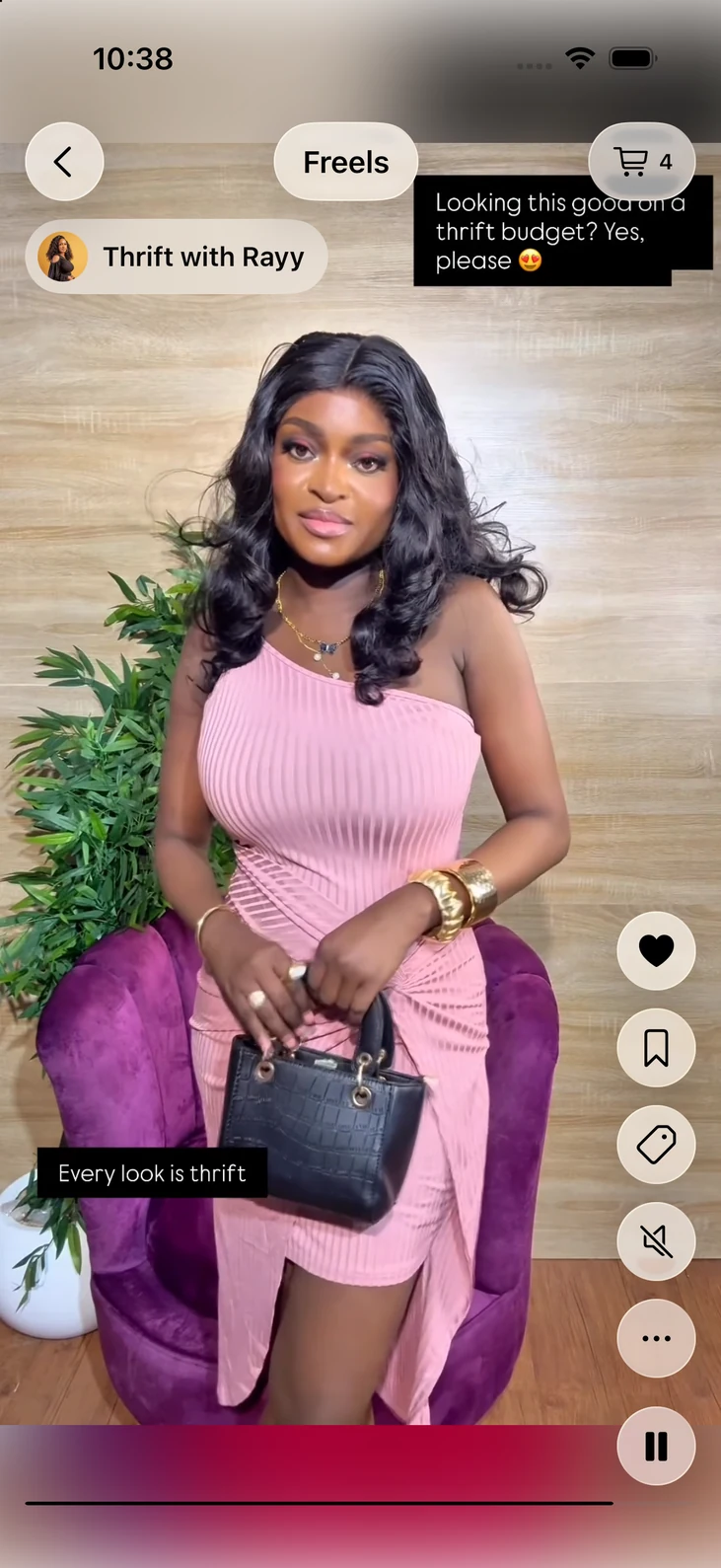
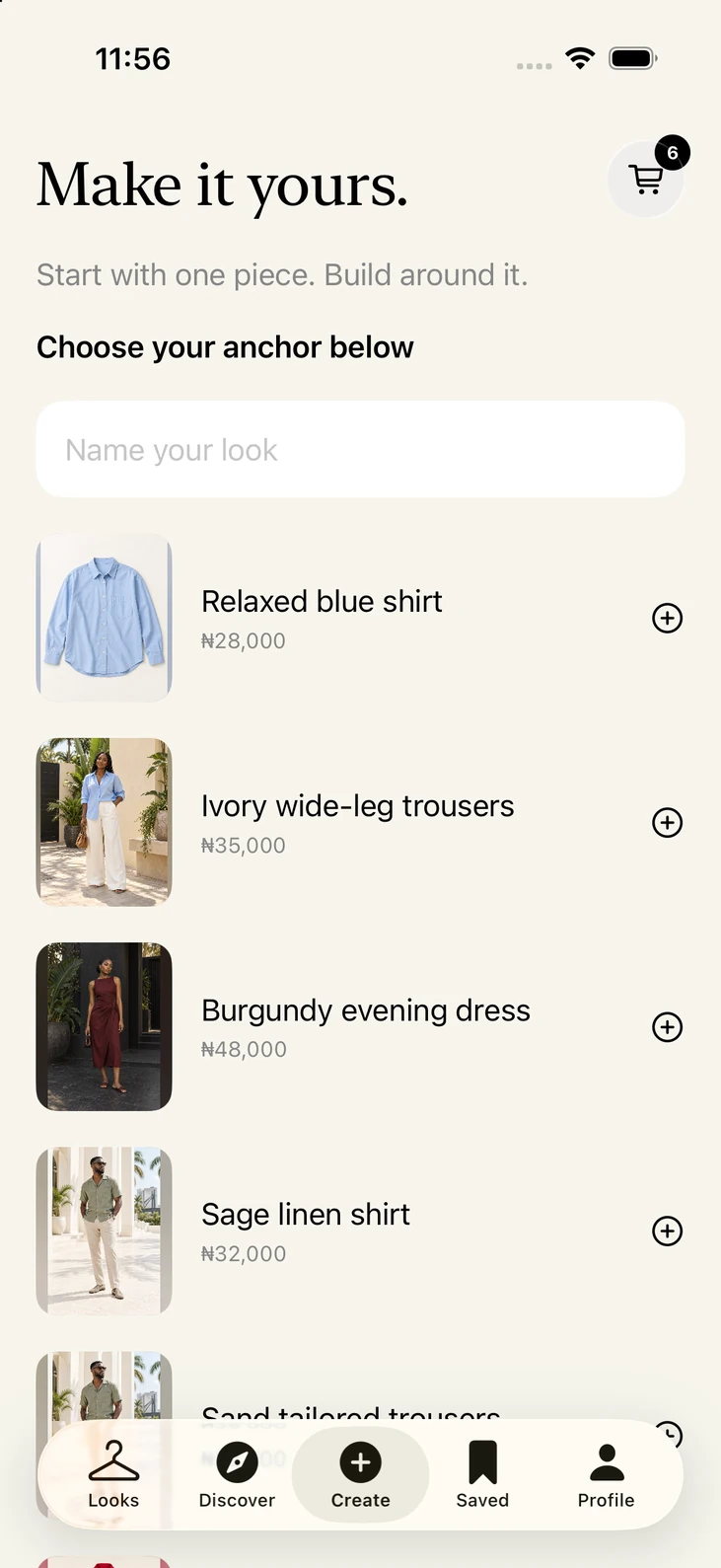
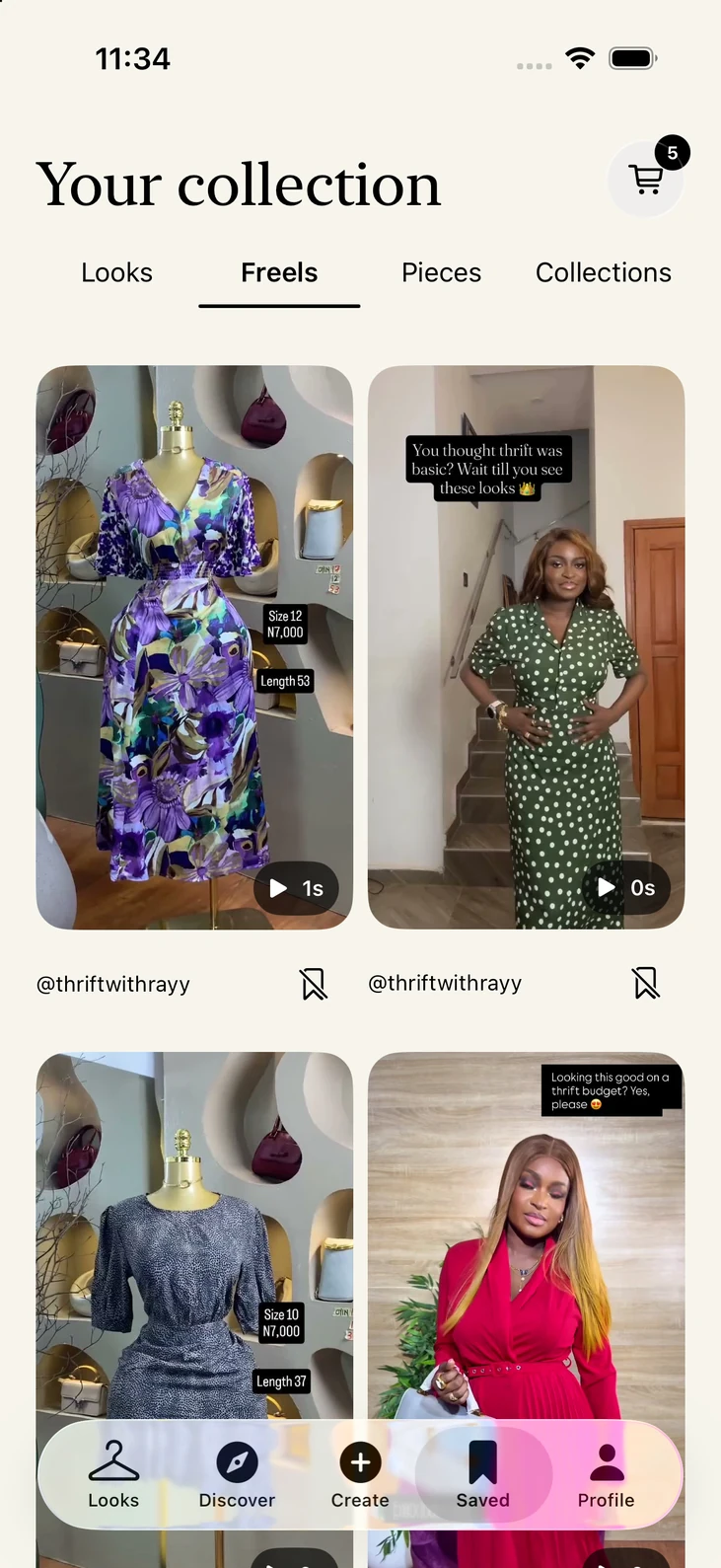
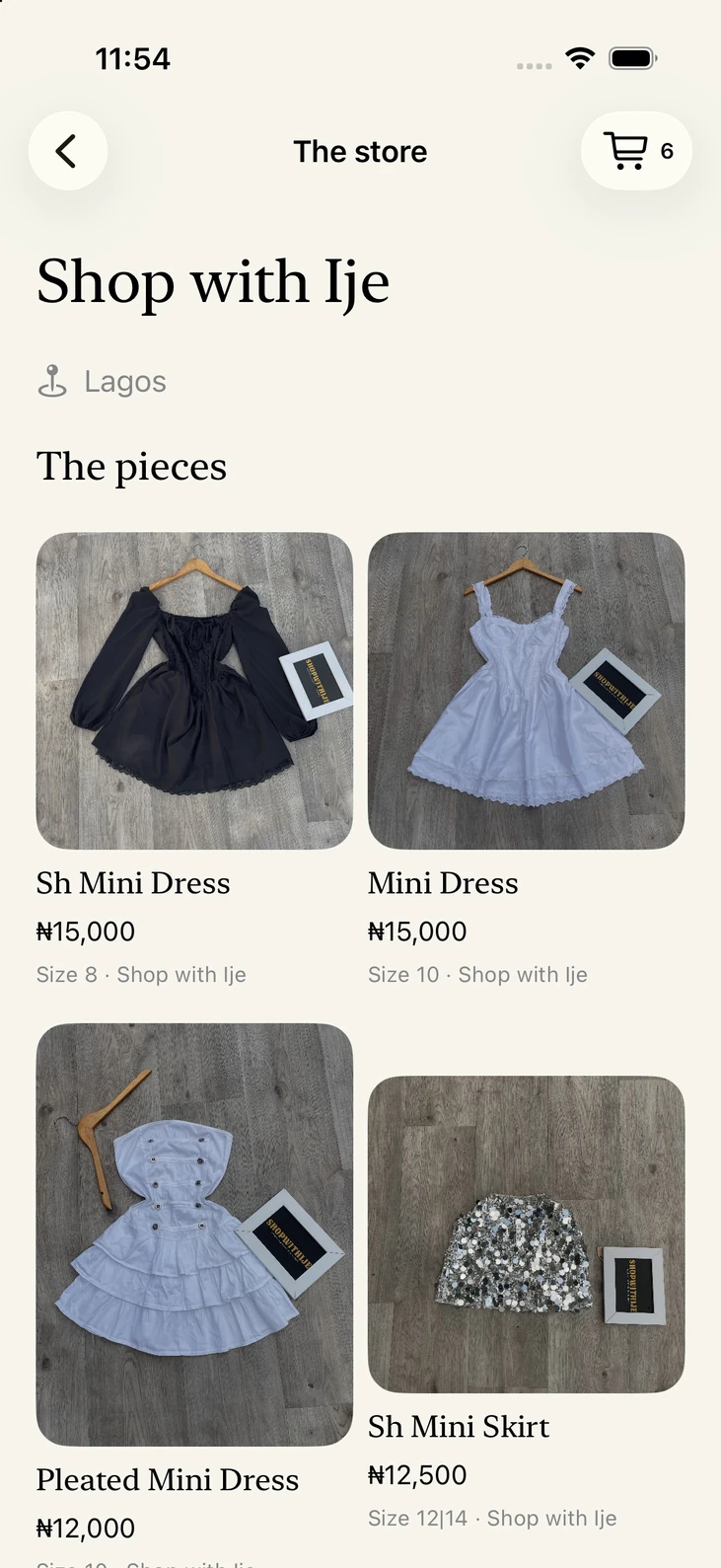
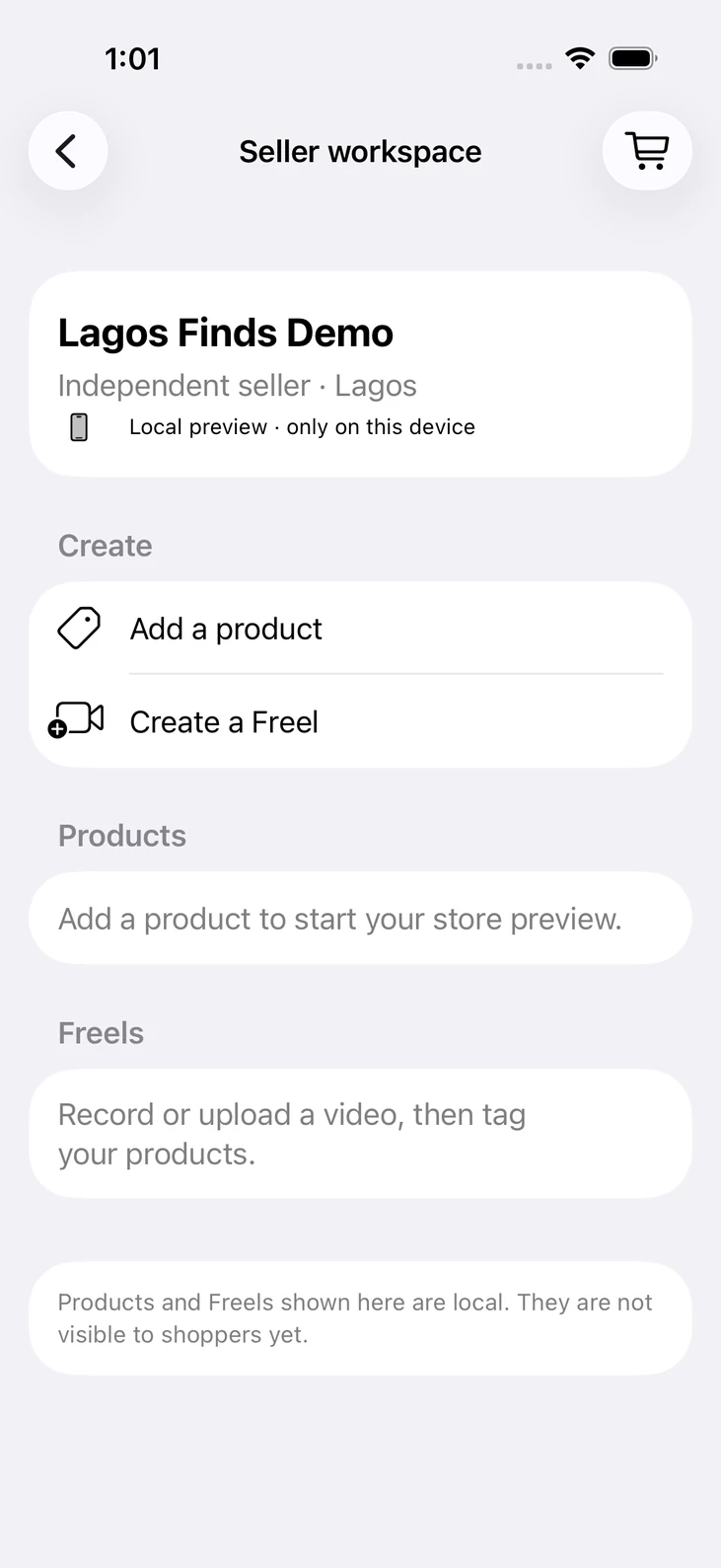
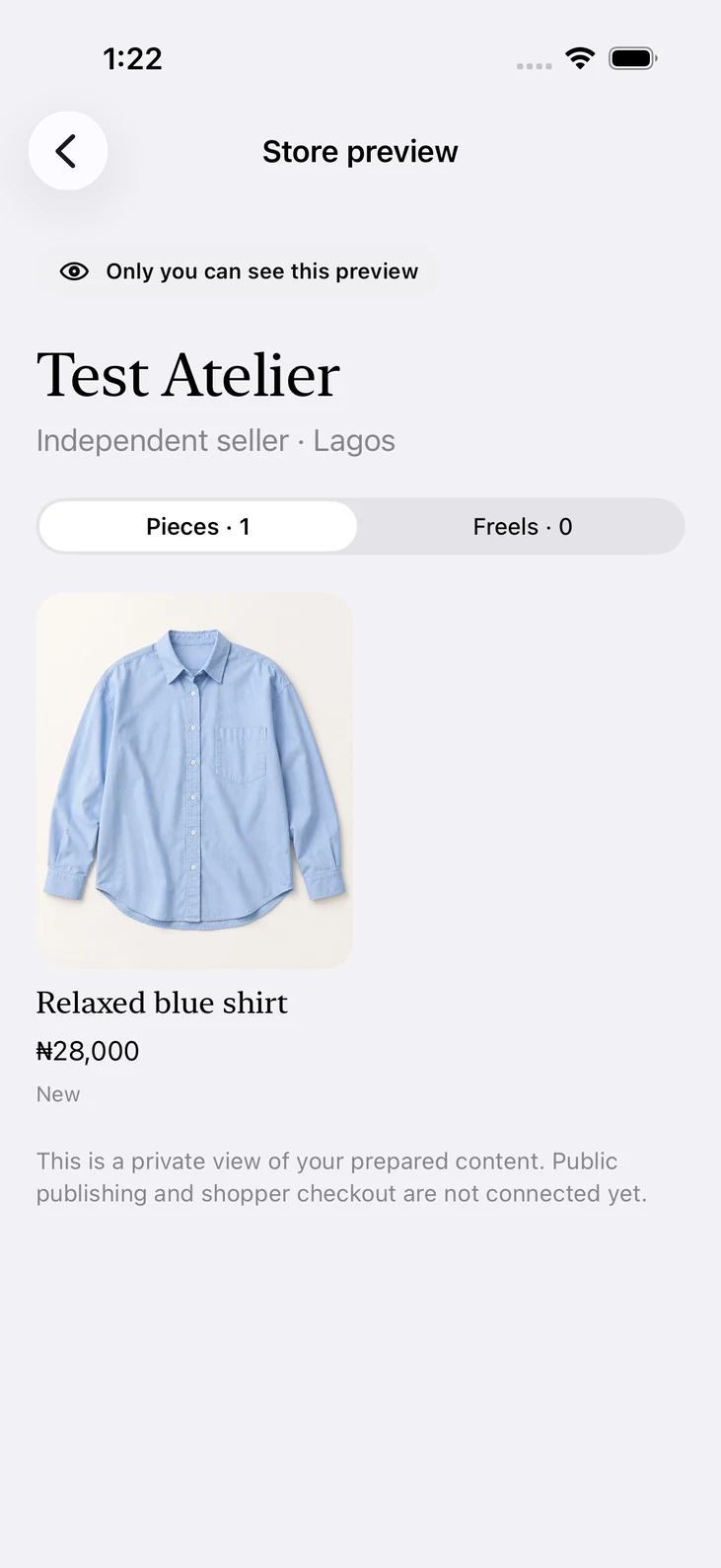
Status: Naija Fashion is a pre-launch product prototype. The screens below use local demonstration content; they do not represent live sellers, orders or users.
The product idea
Most fashion discovery products stop at inspiration, while most marketplaces begin with a catalogue grid. Naija Fashion joins those two moments. A shopper can encounter a complete look, shop the products behind it, upload an image they already like, or describe what they want in natural language.
The first market is Lagos. That makes location, seller trust, delivery and local style vocabulary part of the product rather than regional settings to add later.
Looks as the storefront
The primary surface is visual and full-screen. A look carries its location, saved state, cart entry point and a direct route to the products without burying the image under marketplace chrome. Discovery remains expressive while the commercial action stays obvious.
The navigation separates Looks, Discover, Create, Saved and Profile. The prototype also carries selected products into a local cart and checkout review, while keeping those states explicit about the absence of live payment and fulfilment.
Freels: video with a commerce model
Sellers can choose or record a short video, then attach products to specific moments. The product model therefore keeps the video, its timeline and the tagged catalogue items separate. A clip remains watchable content; product tags make it shoppable without becoming baked-in pixels or captions.
The seller workspace also supports local store setup, product drafts, timed tags and a private storefront preview. Rights confirmation is part of both product and Freel authoring. These are locally persisted prototype flows; they do not publish inventory to real shoppers.
Search from inspiration
The inspiration flow accepts an image plus explicit category and colour choices. Those constraints currently search local catalogue metadata; the app does not claim that image recognition is running. The planned vision service would use the image as evidence of silhouette, colour, texture and styling while keeping the shopper's visible constraints editable.
What comes next
The current work proves the product language and substantial shopper and seller journeys in native SwiftUI. Production still requires authentication, verified sellers, public media and catalogue publishing, live inventory and search, payment and escrow processing, logistics, moderation and dispute operations. Those remain roadmap work, not claims made by this case study.